Coding vs Robotics: Which Should Students Learn First?
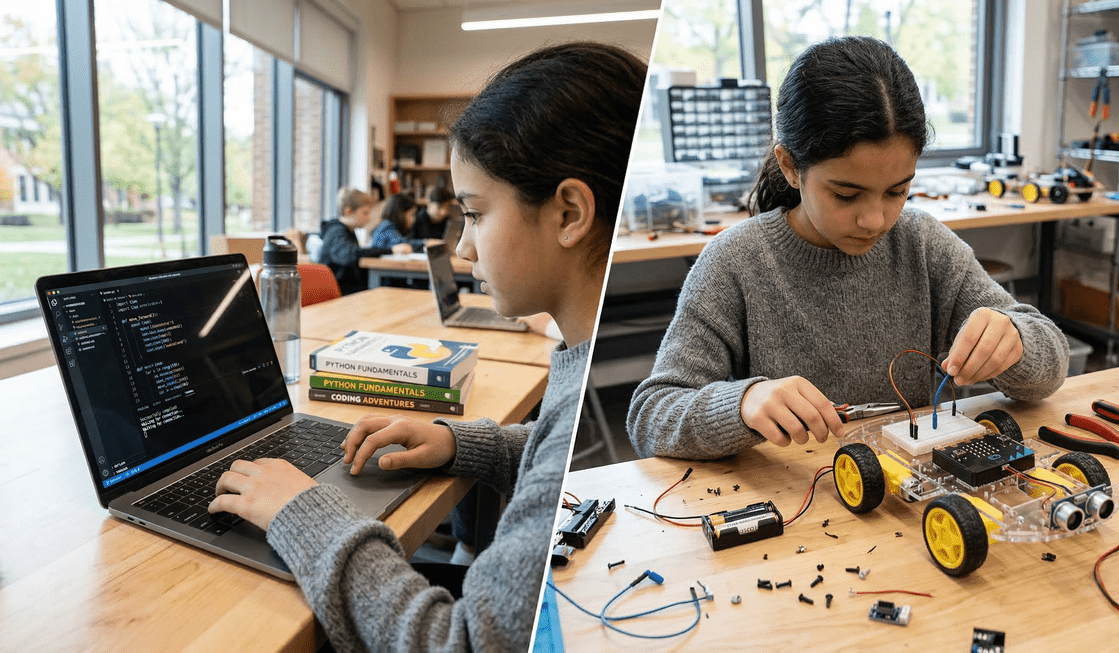
For most students, robotics is the best starting point because it makes abstract logic tangible. While coding is the "language," robotics provides the "body" that makes that language visible. Starting with robotics allows students to see the immediate physical impact of their code-such as a motor turning or a light flashing-which builds higher engagement and retention. However, the two are not mutually exclusive; modern STEM education uses robotics as a gateway to master coding naturally. StepSTEM comes with the best Robotics courses. Start with Foundation series for purely beginners.
Understanding the Core Difference: Software vs. Hardware
To decide where to start, we must first define what each field actually covers. While they are deeply intertwined, they focus on different parts of the "brain-body" connection in technology.
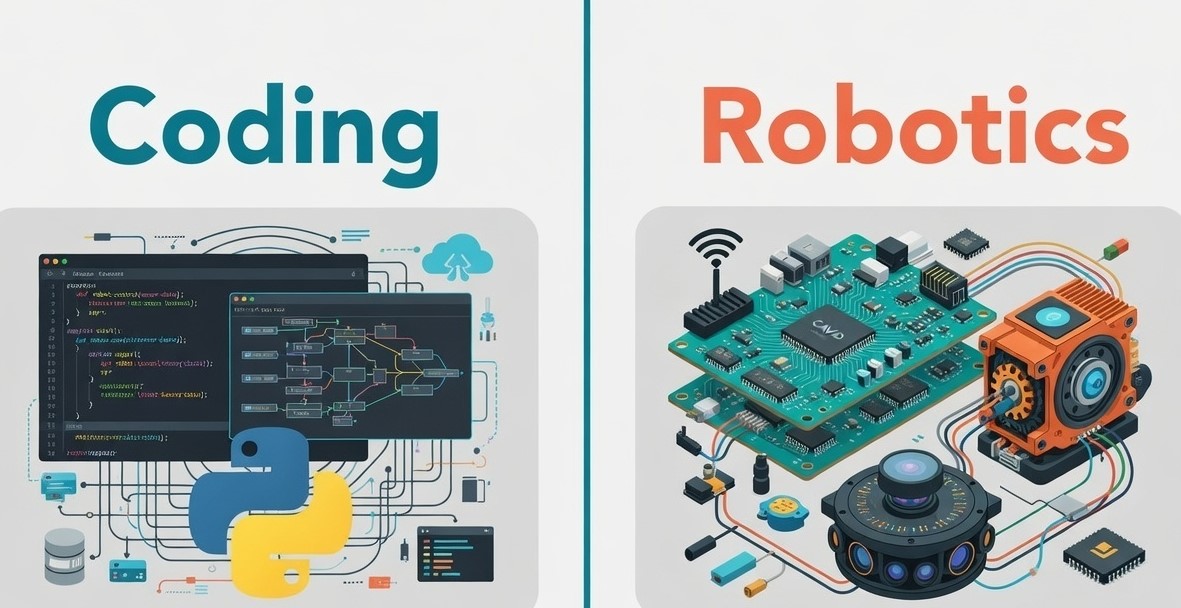
- Coding (The Software/Brain): This is the act of writing instructions for a computer. It is purely digital. When you code, you are working with logic, syntax, and algorithms to create a result on a screen, such as a website, a mobile app, or a video game.
- Robotics (The Hardware/Body): Robotics is a multi-disciplinary field that combines mechanical engineering, electronics, and coding. A robot is a physical machine that senses its environment and interacts with the world.
In short: Coding is about thinking; Robotics is about doing. In 2026, the lines are blurring because of AI. Most robots now use advanced AI coding to "see" and "learn," making it impossible to be a great roboticist without understanding code. However, for a beginner in Class 6 or 7, the distinction is clear: Do you want to build a world inside a screen (Coding), or do you want to build a machine that moves across your desk (Robotics)?
The Case for Robotics First: Why Physicality Matters
Many parents ask if a child needs to learn Python or Java before they touch a robot. The answer is a firm No. In fact, starting with robotics often solves the biggest problem in early coding education: boredom.
Immediate Feedback Loops
In pure coding, if a student makes a mistake in a "Print" statement, the computer simply shows an error message. In Robotics, students do lots of coding stuff and logical thinking with seeing results physically, like if a student codes a motor incorrectly, the robot might spin in circles or bump into a wall. This physical feedback is much more intuitive for young minds. They don't just "see" the error; they experience it.
Multi-Sensory Learning
Robotics engages more parts of the brain. A student is:
- Touching components (wires, sensors, chassis).
- Seeing physical movement.
- Hearing the hum of motors or the beep of a buzzer.
- Calculating real-world math (angles of a turn, distance in centimeters).
This "hands-on" approach aligns with the National Education Policy (NEP 2020) in India, which emphasizes experiential learning over rote memorization.
Comparison Table: Coding vs. Robotics for Beginners
| Feature | Pure Coding (Apps/Games) | Robotics (Arduino/Kits) |
|---|---|---|
| Primary Focus | Logic, Math, UI Design | Mechanics, Electronics, Logic |
| Tangibility | Virtual (Screen-based) | Physical (Real-world movement) |
| Learning Curve | High (Syntax can be tricky) | Moderate (Visual/Block coding options) |
| Patience Require | High (Debugging text) | Medium (Building is exciting) |
| Tools Needed | Computer / Laptop | Computer + Hardware Kit |
| Starting Age | 7+ (Scratch), 12+ (Python) | 9+ (Basic Kits), 11+ (Arduino) |
The "Synergy" Model: How They Work Together
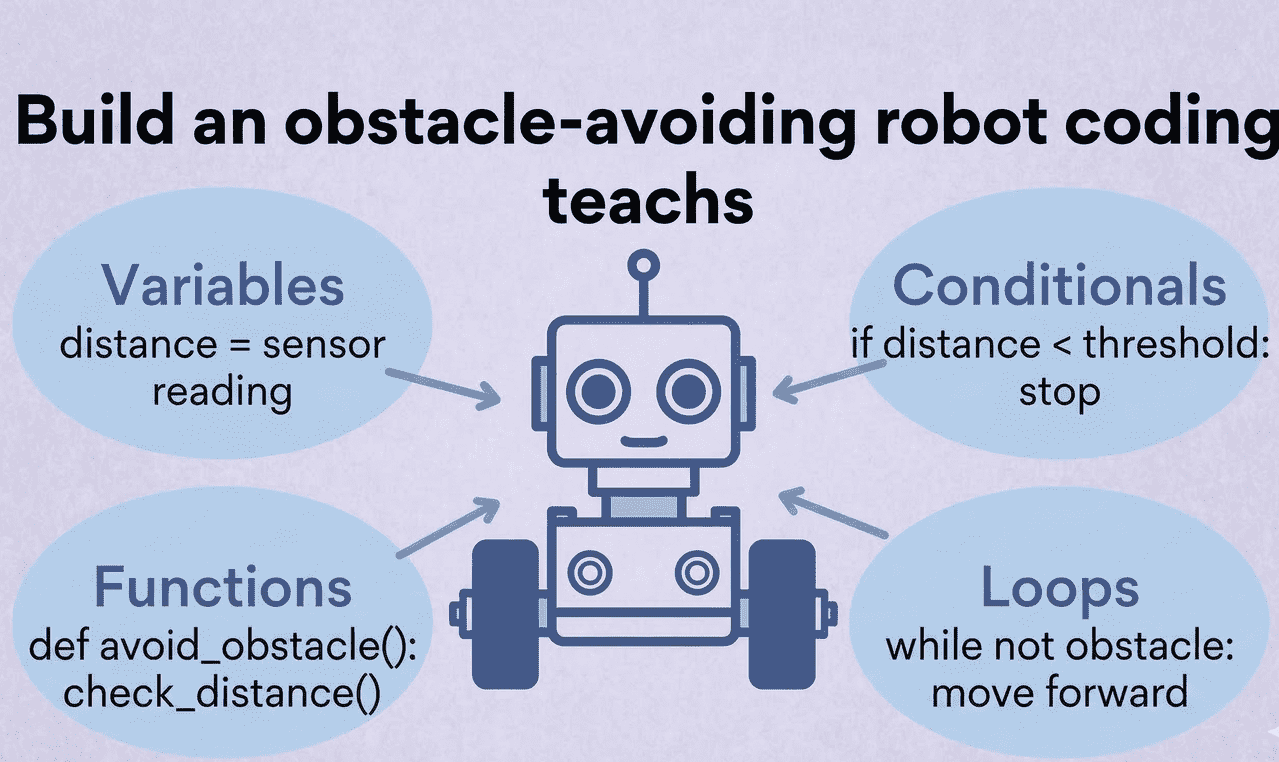
The most successful students don't choose one; they use one to master the other. At StepSTEM, we view robotics as the "Applied Laboratory" for coding.
When a student builds an Obstacle-Avoiding Robot, they are secretly learning four major coding concepts without realizing it:
- Variables: Storing the distance from the ultrasonic sensor.
- Conditionals (If/Else): If distance is less than 10cm, then stop; else move forward.
- Loops: Continuously checking the sensor data.
- Functions: Creating a specific "TurnLeft" command.
By the time the student moves to pure software coding, they already understand the why behind the logic. They aren't just memorizing commands; they are recalling how those commands made a physical object move.
Career Outlook: The 2026 Landscape
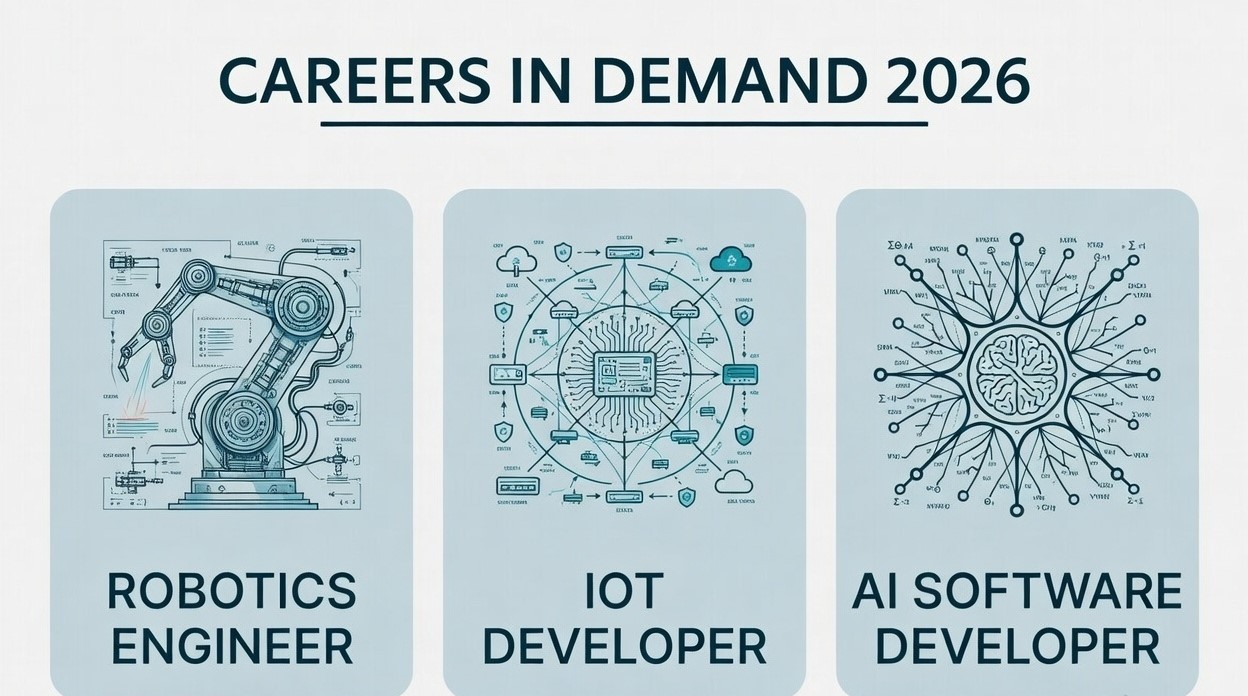
The job market has shifted. In 2026, we are seeing a massive demand for "Full-Stack Hardware Engineers." These are professionals who understand both the code and the machine.
- Robotics Engineers: Design autonomous systems for healthcare, logistics (drone delivery), and smart manufacturing.
- IoT (Internet of Things) Developers: Creating smart home devices that require a deep understanding of sensors and connectivity.
- AI Software Developers: Writing the neural networks that allow robots to navigate complex human environments.
While a pure coder can find work in web development, a student with a robotics background is prepared for the Industry 4.0 revolution, where physical machines and digital data merge.
Common Challenges and Myths
"My child isn't good at Math, so they can't do Robotics or Coding." This is a common misconception. In reality, robotics makes kids better at Math. When a student has to calculate the circumference of a wheel to program a robot to move exactly one meter, math becomes a tool for success rather than a boring classroom subject.
Other Challenges:
- Complexity: Beginners often get overwhelmed by too many wires. Solution: Use structured kits (like StepSTEM's Code Wheels) that introduce one component at a time.
- Cost: People think robotics is expensive. Solution: In 2026, basic microcontroller kits are highly affordable (under ₹1,000), making them accessible to almost every household.
- Soldering: Parents fear the safety of hot tools. Solution: Modern beginner robotics uses breadboards and jumper wires, requiring zero soldering.
Final Verdict: Which One First?
If your child is naturally curious about how things work-if they like taking toys apart or building with blocks-start with Robotics. It provides the "Hook" that keeps them interested. If your child is obsessed with storytelling, drawing, or playing complex strategy games, start with Coding. The digital canvas might be their best playground.
However, for a well-rounded STEM foundation that prepares a student for the competitive landscape of the 2030s, a Robotics-First approach is the most robust. It teaches the hardware, the software, and the problem-solving resilience needed to bridge the gap between imagination and reality.
Conclusion
The debate isn't really about "Coding vs. Robotics"-it’s about how to best ignite a student's passion for technology. While coding is a vital skill, robotics is the vehicle that delivers that skill in a fun, meaningful, and unforgettable way. By building a robot, a student doesn't just learn to write code; they learn to create solutions.
StepSTEM helps students explore robotics, coding, and real STEM projects through hands-on learning. Start building today - book a free trial at stepstem.in.
Frequently Asked Questions
Can I learn robotics without knowing how to code?
Yes. StepSTEM understands where the student faces the problem, and we come up with the best robotics kits based structured course for the student. Many beginner kits use visual "block" coding where you drag and drop commands. This allows you to learn the mechanical and electronic side of robotics before you ever have to type a single line of text-based code.
Is coding or robotics harder for a 12-year-old?
Pure coding can sometimes feel "harder" because it is abstract; there is nothing to touch. Robotics involves more parts (sensors, motors), but it is often perceived as "easier" because the results are physical and exciting. Which is better for school projects? Robotics projects (like a smart irrigation system or an alarm bot) generally perform better in school exhibitions because they are interactive. Judges and teachers can see the project working in the real world, which makes the student's effort more visible.
What is the minimum equipment needed for robotics?
To start, you need an Arduino Uno board, a USB cable, a breadboard, some LEDs, resistors, and a few sensors (like an ultrasonic or light sensor). Bundled kits like those from StepSTEM provide all of this in one package.
Does NEP 2020 favor one over the other?
The NEP 2020 emphasizes "Coding" as a mandatory skill from Class 6, but it specifically advocates for vocational and hands-on integration. Robotics is the primary way schools are implementing this, as it covers the coding requirement while adding engineering and physics.